Hard news often arrives on a phone. These interactive cards start there.
Protocol & People has turned its plain-language cancer card deck, Cards on the Table, into three sets of interactive cards. Each one opens on a phone. Players look up new words, and the answer comes from the card.
Play them
For patients and families
The first months
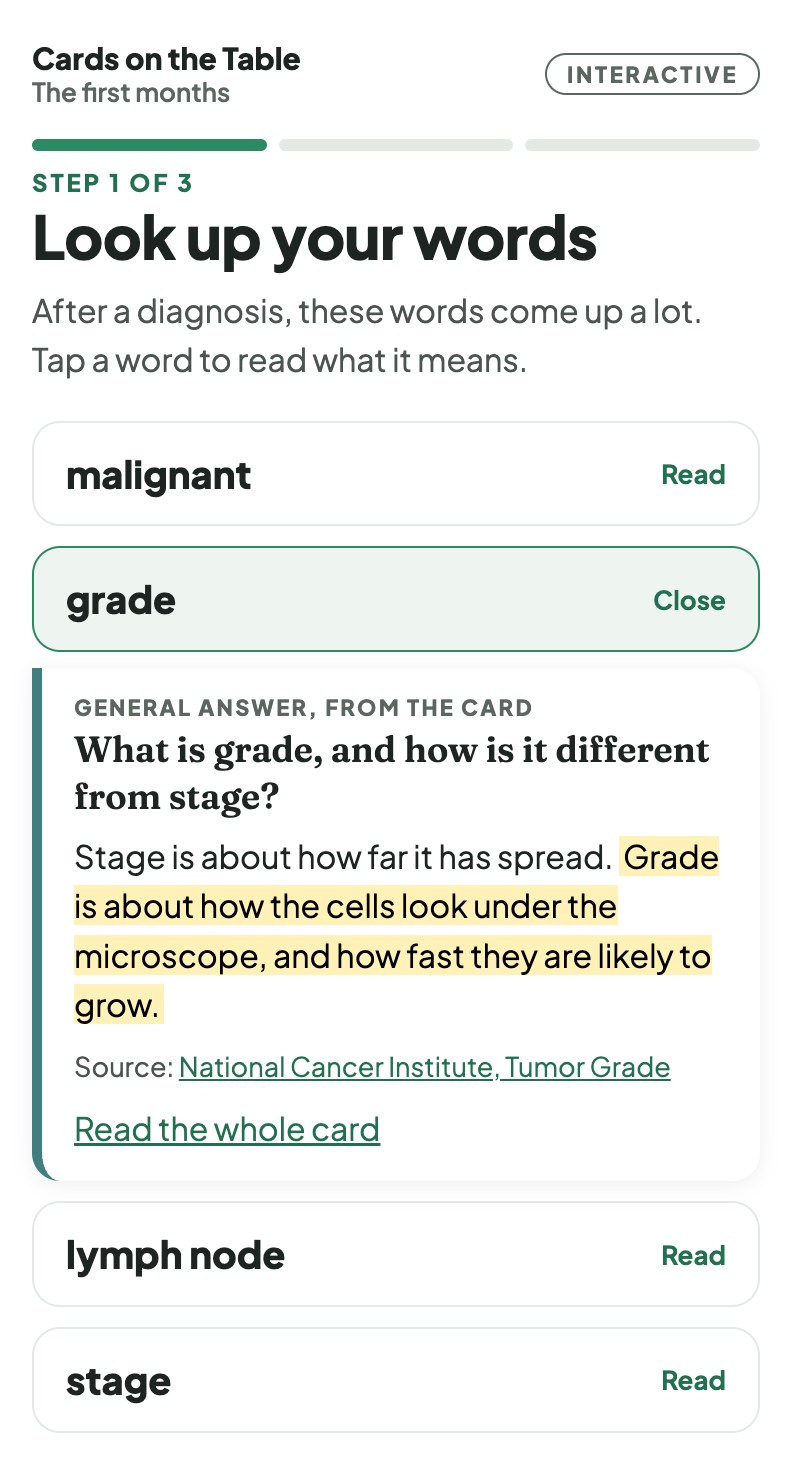
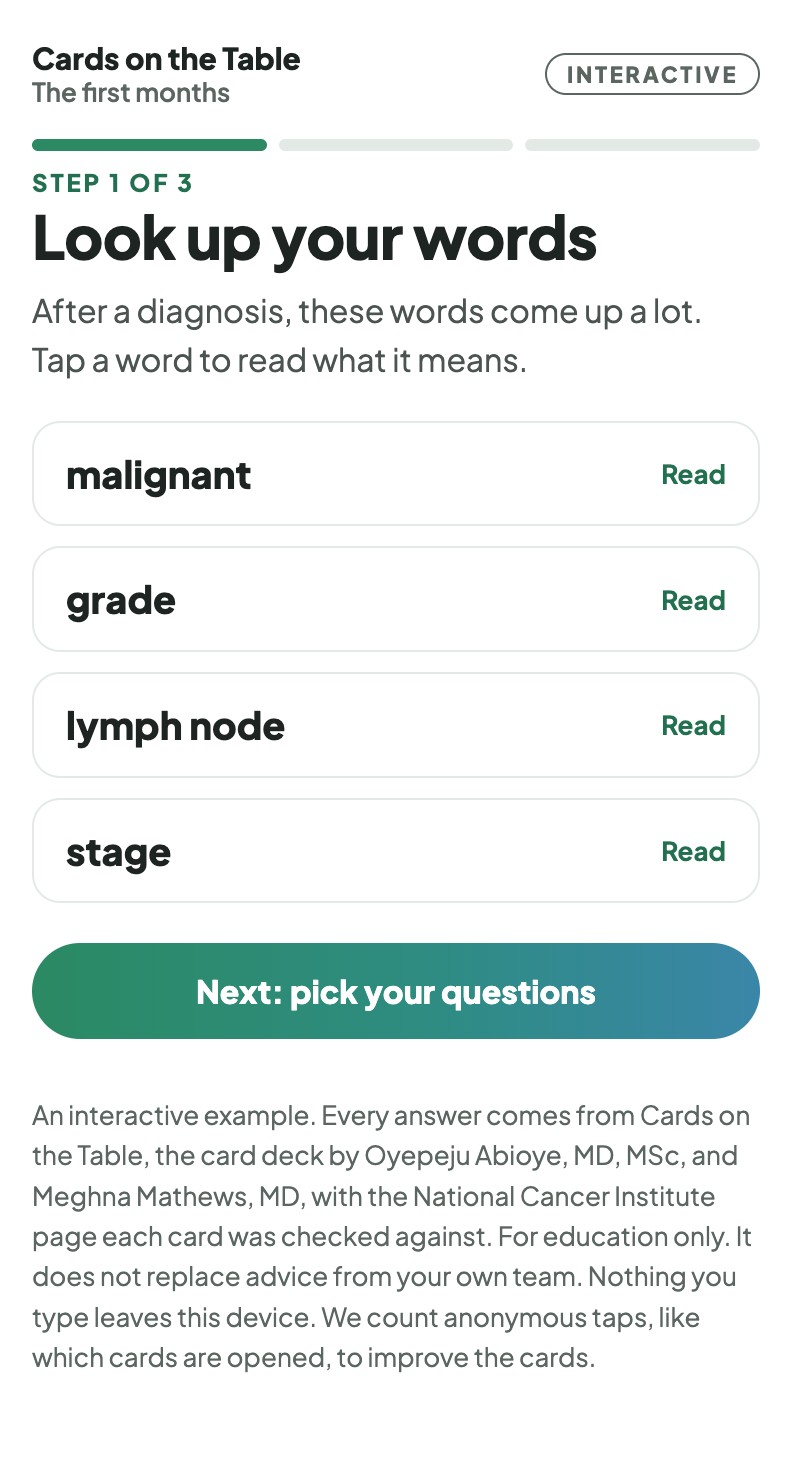
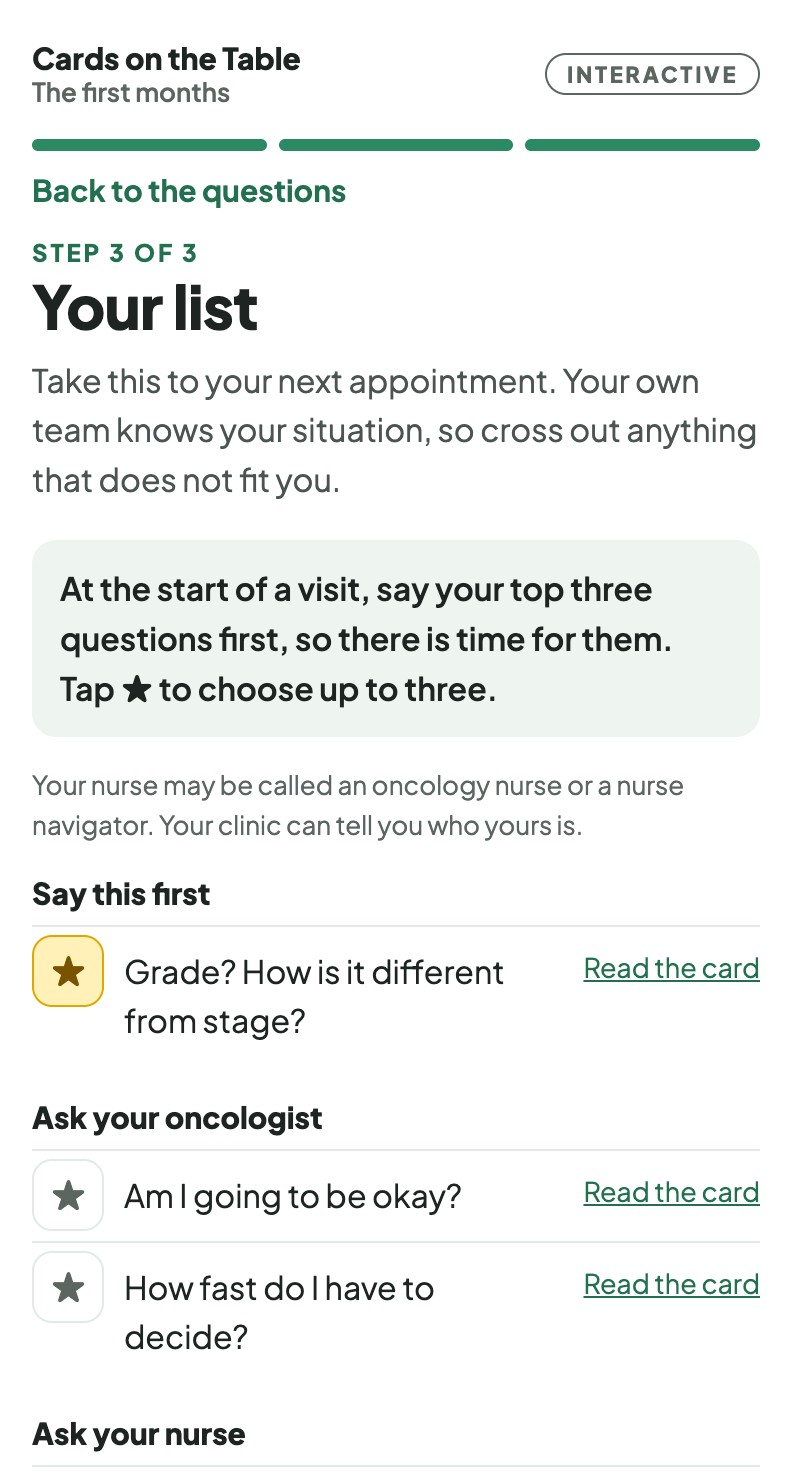
Three plain steps. Look up the new words (malignant, grade, lymph node, stage), and each card answer opens with its source. Pick the questions you want to ask, each one with who can answer it. Then take your list, with your top three first. Nobody in it plays a nurse or a doctor. Every answer comes from a card.
For anyone thinking about a trial, and the people helping them
Thinking about a clinical trial?
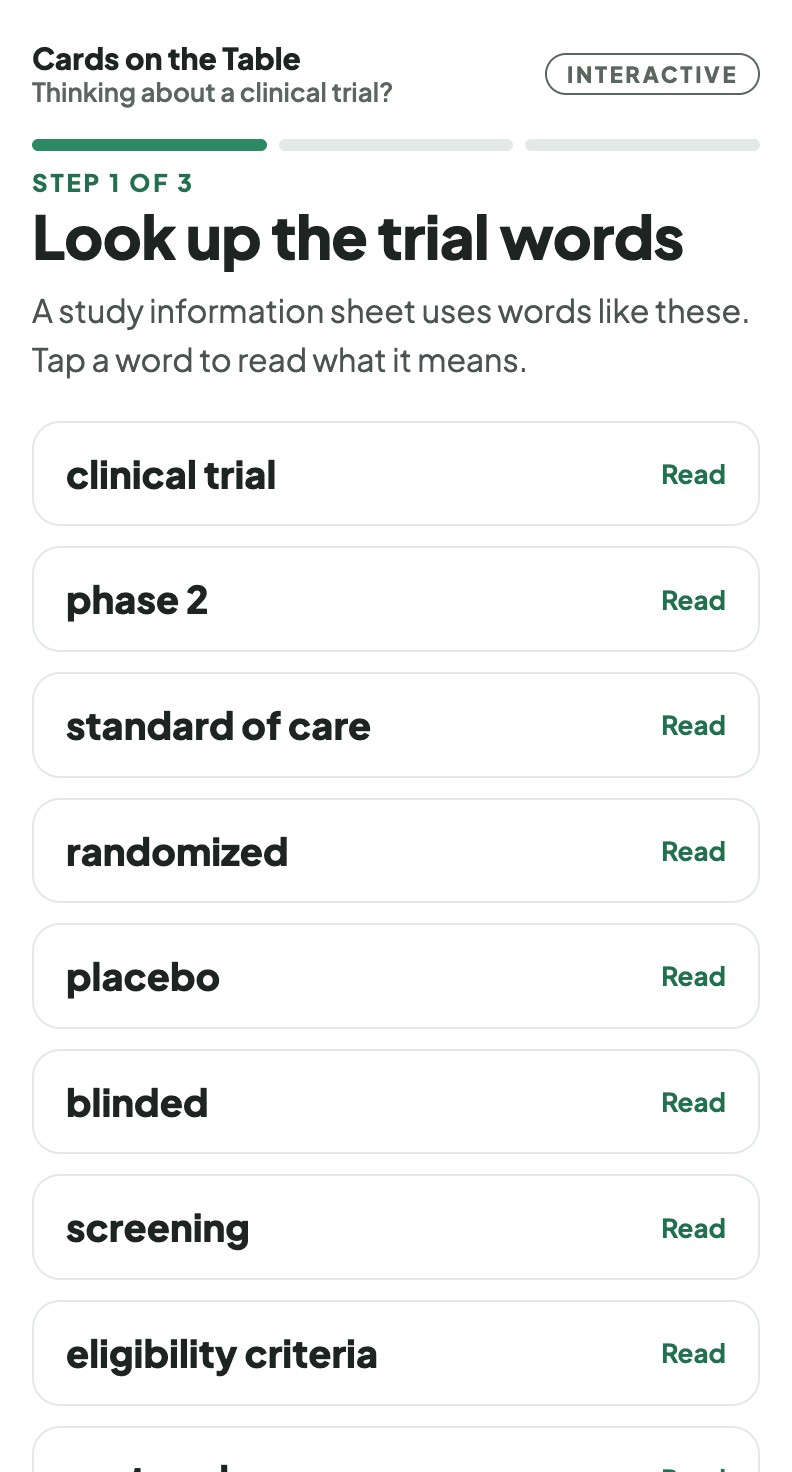
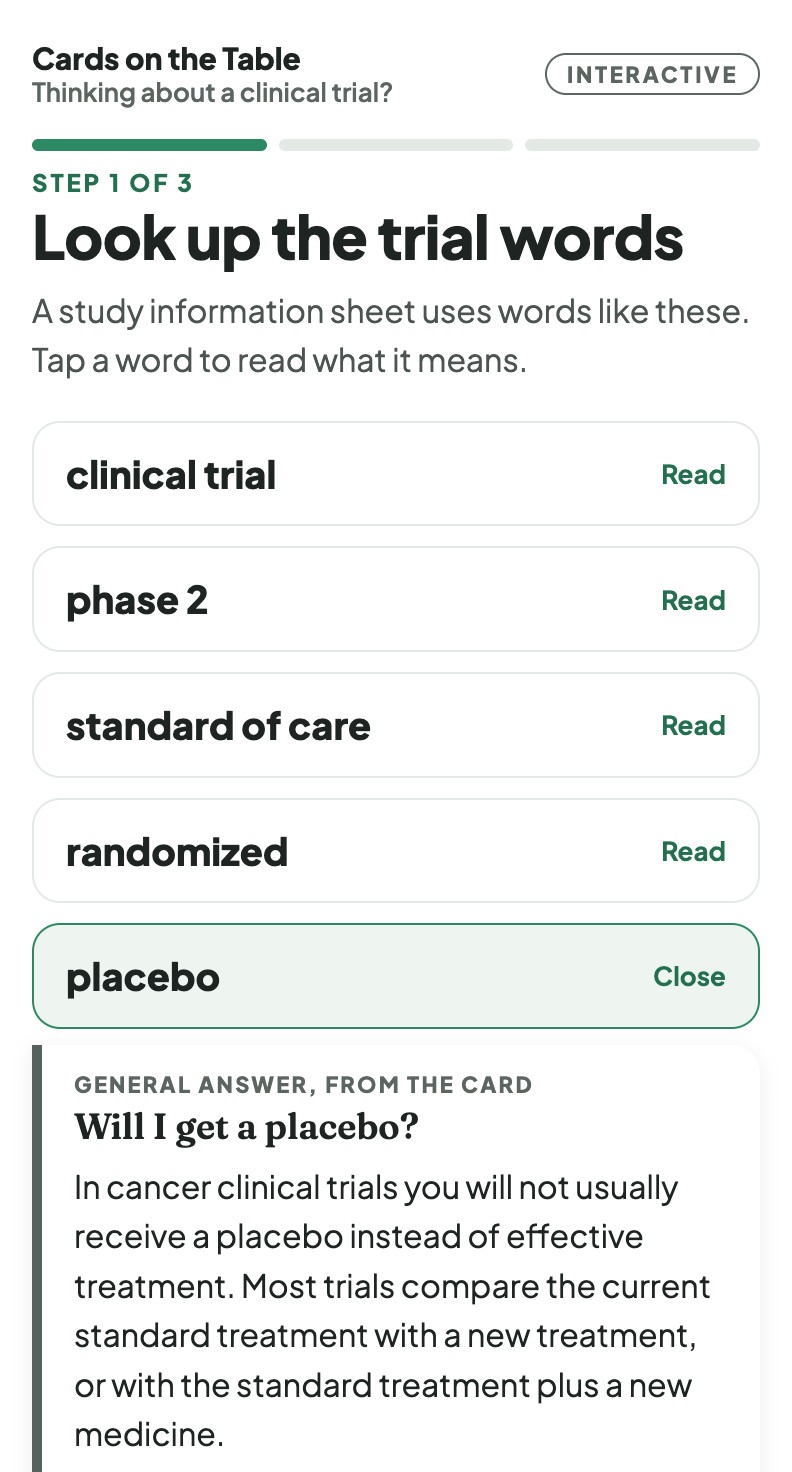
Three plain steps. Look up the trial words (randomized, placebo, blinded and more), each with its card. Choose a path (screening, more time, a second opinion, or no, thank you) and see the card questions to ask before taking it. Then take your list. Every choice is respected, including no. Nobody in it plays a nurse or a doctor. Every answer comes from a card.
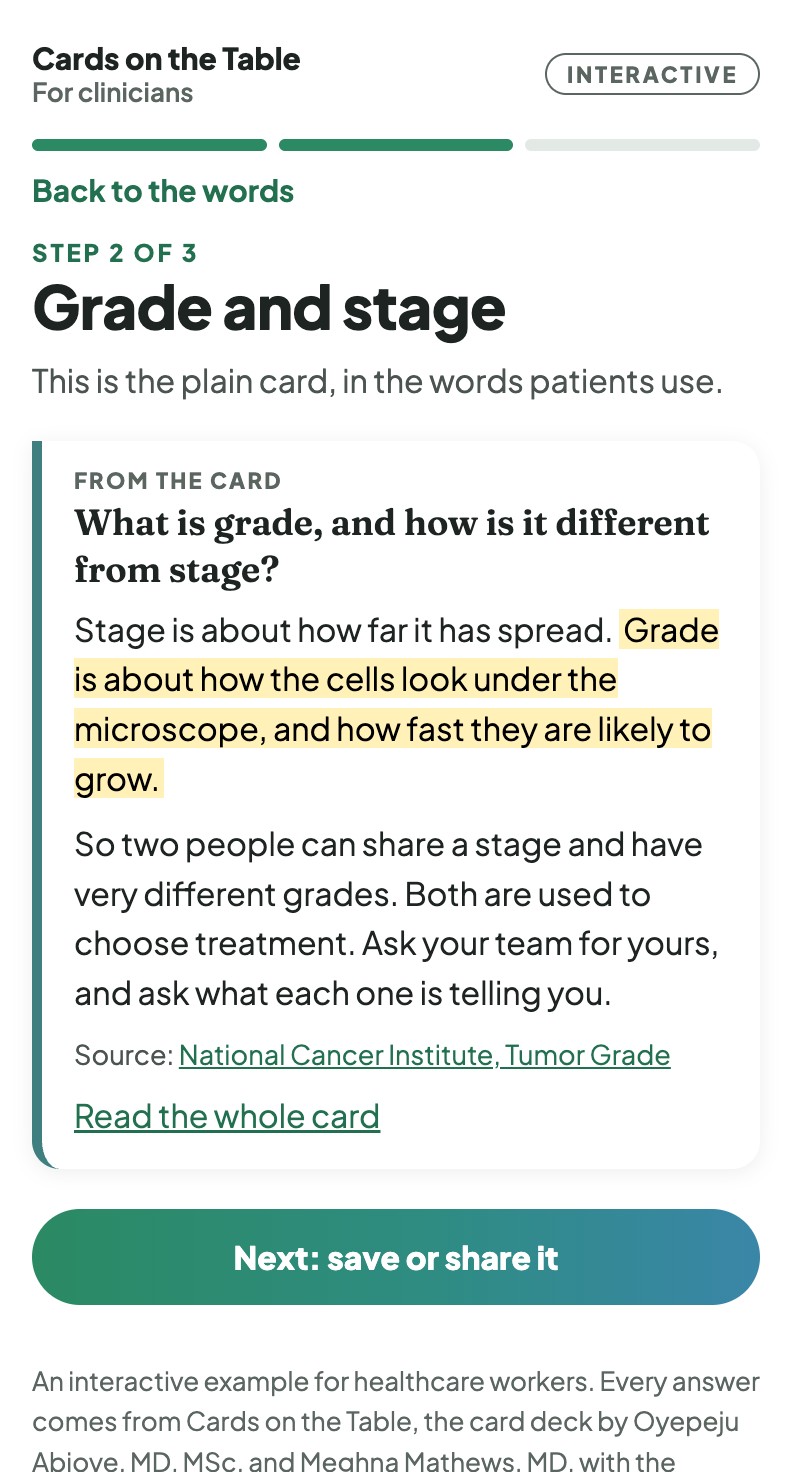
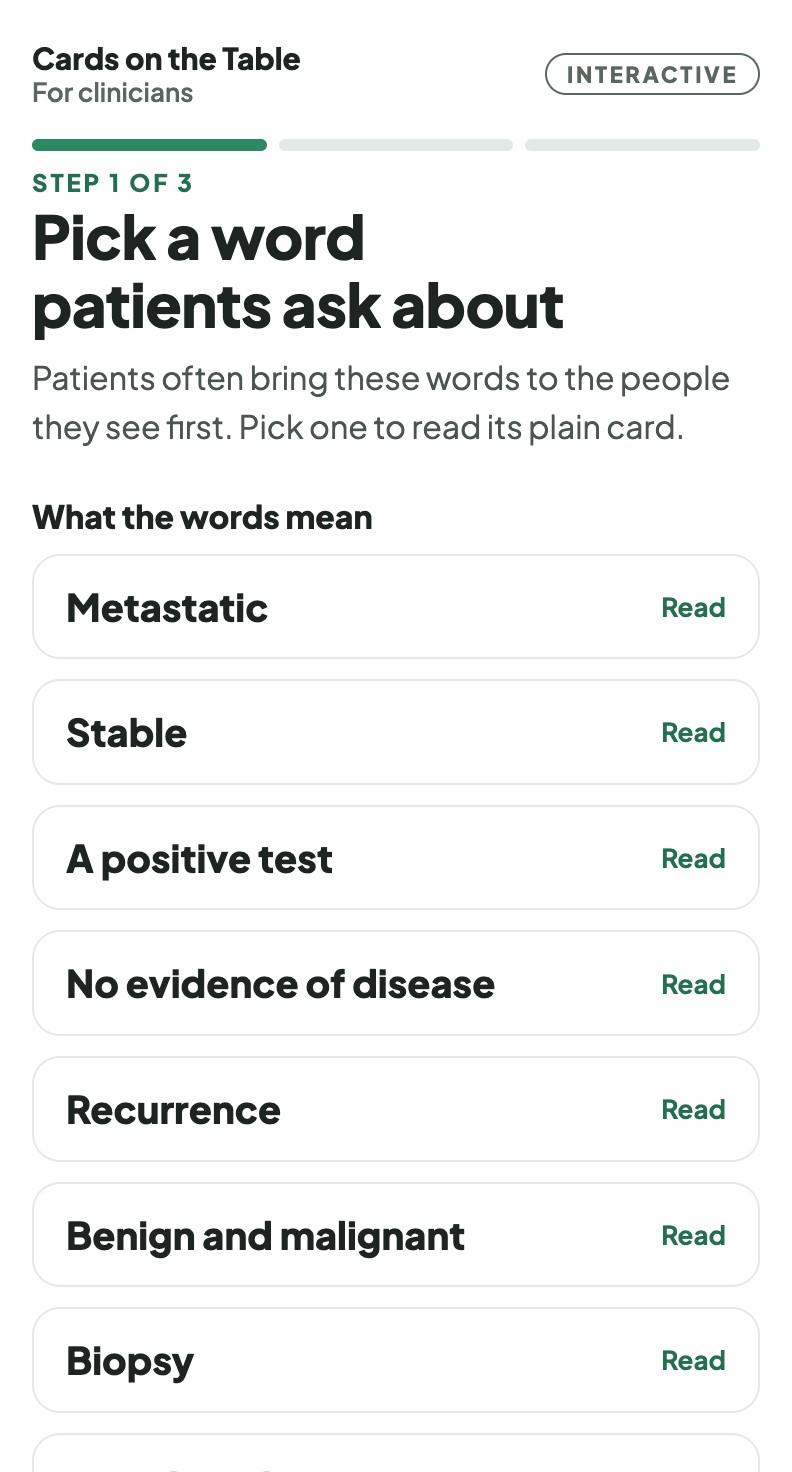
Three plain steps. Pick a word patients ask about, read the plain card with its source, then save it or share its link, with a note on who usually answers. Nothing is right or wrong.
Every answer comes from Cards on the Table, more than 150 questions and answers. They never write a new medical answer.
Everything in them is an interactive example: the people and events are not real. None of them shows a test result or talks about a player's own case, and every answer is labeled as general.
Nothing a player chooses changes anyone's health. There are no timers, scores or a way to lose. Each one ends on questions answered.
Made for a phone.
Nothing a player types leaves their phone. The website copies count anonymous taps, like which cards are opened, to improve the cards.
No AI runs inside them. Every line was written and checked before it shipped.
In English for now. The card deck itself is in English, Spanish, Chinese, Hindi, Yorùbá and Vietnamese.
Story ideas
A lot of new words, all at once
After a diagnosis, people meet a lot of new words in a short time. The first months starts there: four of those words, each with its card.
Know the trial words ahead of time
The trial cards walk through an example study sheet, so the words are familiar before a trial ever comes up, and saying no is shown as a respected choice.
Screening
Plain answers on when to start mammograms, colon cancer checks, Pap tests, PSA tests and lung cancer screening.
Plain words for the whole care team
Nurses, pharmacists, navigators, interpreters and doctors outside oncology get the same plain cards patients see, so a word is explained the same way by everyone.
“If trials are built by people, the knowledge of how they work should be for everyone.”
Oyepeju Abioye, MD, MSc, Protocol & People
Images
Free to use in coverage of Protocol & People. Tap an image to download it. Credit: Protocol & People.
The first months, step 1: look up the new words.The first months: tap a word and its card answer opens, with its source.The first months, step 3: your list, by who to ask, with your top three first.Thinking about a clinical trial?, step 1: look up the trial words.Thinking about a clinical trial?: tap a word and its card answer opens, with its source.For clinicians, step 1: pick a word patients ask about.For clinicians: the plain card, ready to save or share.
Who made them
Protocol & People LLC, Pennsylvania. Team: Oyepeju Abioye, MD, MSc (clinical content and editorial standards), Ayooluwa Akintola, PhD (data, infrastructure and operations), and Meghna Mathews, MD (co-author of Cards on the Table).
Interviews and questions: info@protocolandpeople.org
Bios, logos and facts about Protocol & People: the press kit.